Don’t let PAVA spray be used on children
We are taking legal action to challenge the government's decision to authorise the use of this weapon in prisons holding children.
We are taking legal action to challenge the government’s decision to authorise the use of this weapon in prisons holding children.
In April 2025, the Ministry of Justice authorised the use of PAVA spray against children in prison. It has been rolled out to three young offender institutions in England – Feltham A, Werrington and Wetherby – and it has already been used by some staff. We are challenging this decision in the High Court. In September, we were given the green light to take the case forward to a judicial review.
The case is going to be heard on 9 and 10 December 2025.
What is PAVA spray?
PAVA is a chemical irritant spray that can cause severe pain. It is classified as a prohibited weapon under the Firearms Act 1968.
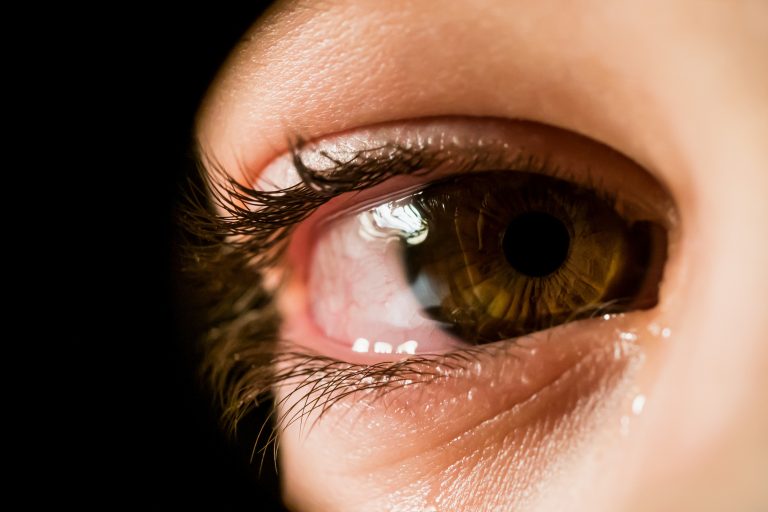
Guidance for children in prison who have been sprayed with PAVA states: “PAVA can be very painful…When PAVA is used, people often feel severe pain in their eyes, they cough a lot, find it hard to think straight and might feel a burning sensation on their skin.”
A training video on the Lincolnshire Police website describes the spray more succinctly. “The best way I can describe it,” the instructor says in the transcript, “is it’s like wet fire.”
How has PAVA spray been used in prisons?
Since its introduction to adult male prisons in 2018, there have been countless instances of PAVA spray being used disproportionately and inappropriately.
Official statistics for the deployment of PAVA spray in adult prisons indicate that a Black person is almost seven times more likely to be sprayed than a White person. PAVA spray has also been used disproportionately against Muslim people in prison, with 35% of those subjected to PAVA in the adult estate being Muslim, despite Muslim people making up only 17% of the population.
Data that we obtained through Freedom of Information Act requests also shows disproportionate use against young adults – more than 60% of those sprayed by PAVA in prison are aged 18 to 24.
One important question that remains unanswered is the extent to which PAVA spray is used disproportionately against people with disabilities. This is because HM Prison and Probation Service (HMPPS) is yet to produce a reliable measure of the prevalence of disabilities in the prison estate, despite promising to do so for several years. However, the heightened risk of PAVA spray to people with disabilities is acknowledged and the government’s own use of force evaluation report recently noted that better data in this area is “much needed”.
Across the adult estate, reports by HM Inspectorate of Prisons (HMIP) have revealed a multitude of problems with the misuse of PAVA, such as: insufficient attempts to de-escalate situations, resulting in PAVA spray not being used as a last resort; insufficient evidence to justify the use of PAVA spray; poor oversight and quality assurance; and, in at least one prison, no routine enquiry into the use of PAVA spray to make sure it was justified or to ensure that any lessons could not be learned.
Use of PAVA spray that is not strictly necessary will constitute a breach of Article 3 of the European Convention on Human Rights, which provides that no one shall be subjected to torture or to inhuman or degrading treatment or punishment.
It is despite this shocking evidence from adult prisons that PAVA spray is now being used against children in prison.
Why are we taking the government to court?
We work to build a more effective and humane response to crime. We have a principled objection to any approach that inflicts pain on someone deliberately, and this includes the use of PAVA spray, which is classified under law as a prohibited weapon under the Firearms Act 1968. It can cause severe pain, and it should not be used on children.
We have brought this legal challenge because we believe that the decision to roll out PAVA for use on children in custody is unlawful.
The decision was flawed because there is no evidence that rolling out PAVA for use on children in custody would reduce harm and violence and, in fact, there is substantial evidence that it may instead make things worse.
Evaluation findings from the PAVA pilot in adult prisons indicated that it did nothing to reduce violence and in fact had a detrimental effect on relationships between staff and the people living there. Some senior managers in adult prisons have commented that there should be greater emphasis on communication rather than increased use of force options.
In a report published in June 2025, the Chief Inspector of Prisons found that children in Feltham (A), Wetherby and Werrington had little opportunity to build vital relationships with staff. But instead of focusing on building relationships, the government has instead chosen to undermine them, by arming staff against the very children they are there to care for. This is a catastrophic development for a system where children experience use of force frequently and is, in the words of the Chief Inspector, “failing to help children learn better ways to manage frustration and conflict”.
We also believe that the decision to roll out PAVA is unlawful because the government has not had proper regard to its impact on children on the basis of their race, religion or disability.
The disproportionate impact of PAVA spray seen in adult prisons raises serious questions about the roll-out to children’s prisons, where there are already concerns about use of force against disproportionately large numbers of children from racialised minorities. The government’s own impact assessment shows that Black boys are expected to be disproportionately affected by the decision and that Muslim children are already subjected to disproportionate use of restraint.
Although the government’s understanding of the impact on children with disabilities is hampered by its own failures on data gathering, it is notable that its own impact assessment shows that neurodiverse children may experience prolonged effects when sprayed with PAVA.
Ministers knew all this, and they still went ahead – a decision that is almost impossible to understand from a youth custody service that claims to have a “child first” approach. What does it say about a system when its leaders feel they need the power to spray chemicals in the eyes of children?
How have other organisations responded to the decision to authorise PAVA spray in prisons holding children?
We are not fighting this alone. The Youth Justice Board, the Children’s Commissioner for England, the Independent Monitoring Boards and the British Association of Social Workers all issued critical statements in response to the government’s decision. HMIP had “serious concerns” about the move. We added our name to a joint statement signed by 37 organisations and individuals working in children’s rights and youth justice, which called the decision “an abject failure in safeguarding those children held in custody”.
How you can help
We have launched a campaign on CrowdJustice to challenge this decision and protect children from harm. We need your donations to help us take on this important work.
In addition, please consider joining the Howard League as a member. This will enable us not only to challenge the rollout of PAVA spray, but also to do further work to build a more humane and effective response to crime.
TV debate: “Evidence is against the use of PAVA spray”
In November 2023, we appeared on Channel 4 News to explain why we oppose the rollout of PAVA spray to prisons holding children.
In a seven-minute debate with the POA, our Chief Executive, Andrea Coomber KC (Hon.), told the programme: “The evidence is against the use of PAVA spray. The review of its use in the adult estate in 2018 showed that it actually didn’t act to quell violence; all it did, really, was undermine confidence and trust of people who were being sprayed.
“We need strong positive relationships between prison staff and children, and I think we should not minimise what this is. This is a weapon that is prohibited under the Firearms Act 1968.”
-
Join the Howard League
We are the world's oldest prison charity, bringing people together to advocate for change.
Join us and make your voice heard -
Support our work
We safeguard our independence and do not accept any funding from government.
Make a donation